
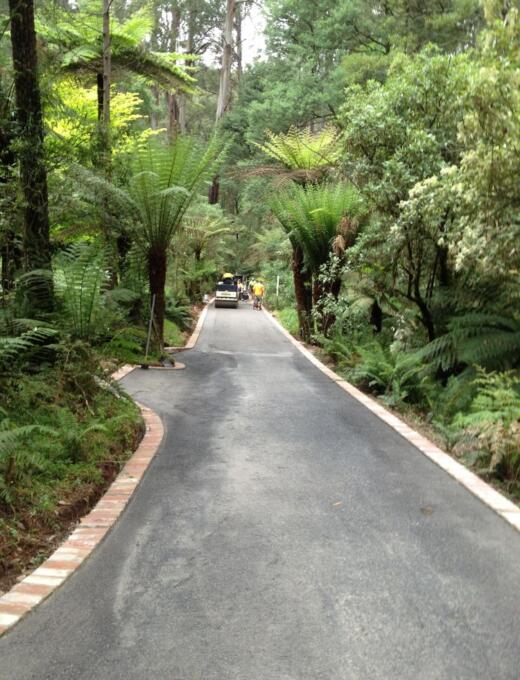
Asphalt pathways in Melbourne and surrounding areas
Asphalt pathways provide a smooth, practical surface for pedestrian access across residential, commercial and industrial properties. Duraseal Creative Concrete constructs asphalt pathways throughout Melbourne for projects requiring defined pedestrian connections between buildings, parking areas, entrances and other parts of a property. The design and construction of an asphalt pathway should reflect how the area will be used, the surrounding surfaces and the conditions of the site. Width, levels, drainage, ground preparation and connections with adjoining areas can all influence the finished pathway.
Our service area extends across Melbourne and surrounding locations, including Wallan, Gisborne, Whittlesea, Sunbury, Craigieburn, Kilmore, Epping, Kyneton, Derrimut and Melton.
Asphalt paths for pedestrian access
Asphalt paths can be used to create defined pedestrian routes through a range of properties and external areas. They can connect entrances, buildings, car parks and other access points while providing a continuous surface for people moving around the site. Duraseal Creative Concrete considers the intended use of the pathway as well as surrounding levels and existing infrastructure when planning each project.
Where pathways connect with other paved areas, these transitions also need to be considered to create a practical route through the property.
Asphalt path contractors for different projects
Experienced asphalt path contractors consider more than the surface itself. The condition of the ground, pathway dimensions, gradients, drainage and adjoining surfaces can all affect how the area needs to be prepared and constructed. Duraseal Creative Concrete works with residential, commercial and industrial clients, as well as builders and property professionals, to construct pathways appropriate for individual sites.
From shorter connections around a property to longer pedestrian routes across larger sites, each pathway can be planned around its intended use and location.
Planning asphalt pathways
Well-planned asphalt pathways should connect logically with the areas people need to access. The route, width and changes in direction should be considered alongside the surrounding property and other vehicle or pedestrian surfaces. Drainage is another important consideration, with surface levels and falls assessed so water movement can be addressed as part of the pathway construction.
Where pathways run alongside landscaped areas, buildings or vehicle surfaces, the edges and transitions can also be planned to create clear separation between different areas of the property.
Asphalt pathways across Melbourne
Duraseal Creative Concrete provides asphalt pathways throughout Melbourne for residential, commercial and industrial properties. Each site is assessed individually so pathway layout, preparation, drainage, levels and connections with surrounding surfaces can be considered before construction begins. For larger commercial and industrial properties, pathways can also form part of a broader external access network, connecting pedestrian areas with entrances, parking areas and other parts of the site.
If you are planning new pedestrian access or improving connections around your property, Duraseal Creative Concrete can assess the site and discuss an asphalt pathway solution suited to its intended use. For larger external projects, you can also explore our roads and car parks services to coordinate pedestrian and vehicle access across the property. Contact Duraseal Creative Concrete today to discuss your pathway requirements and request a quote.